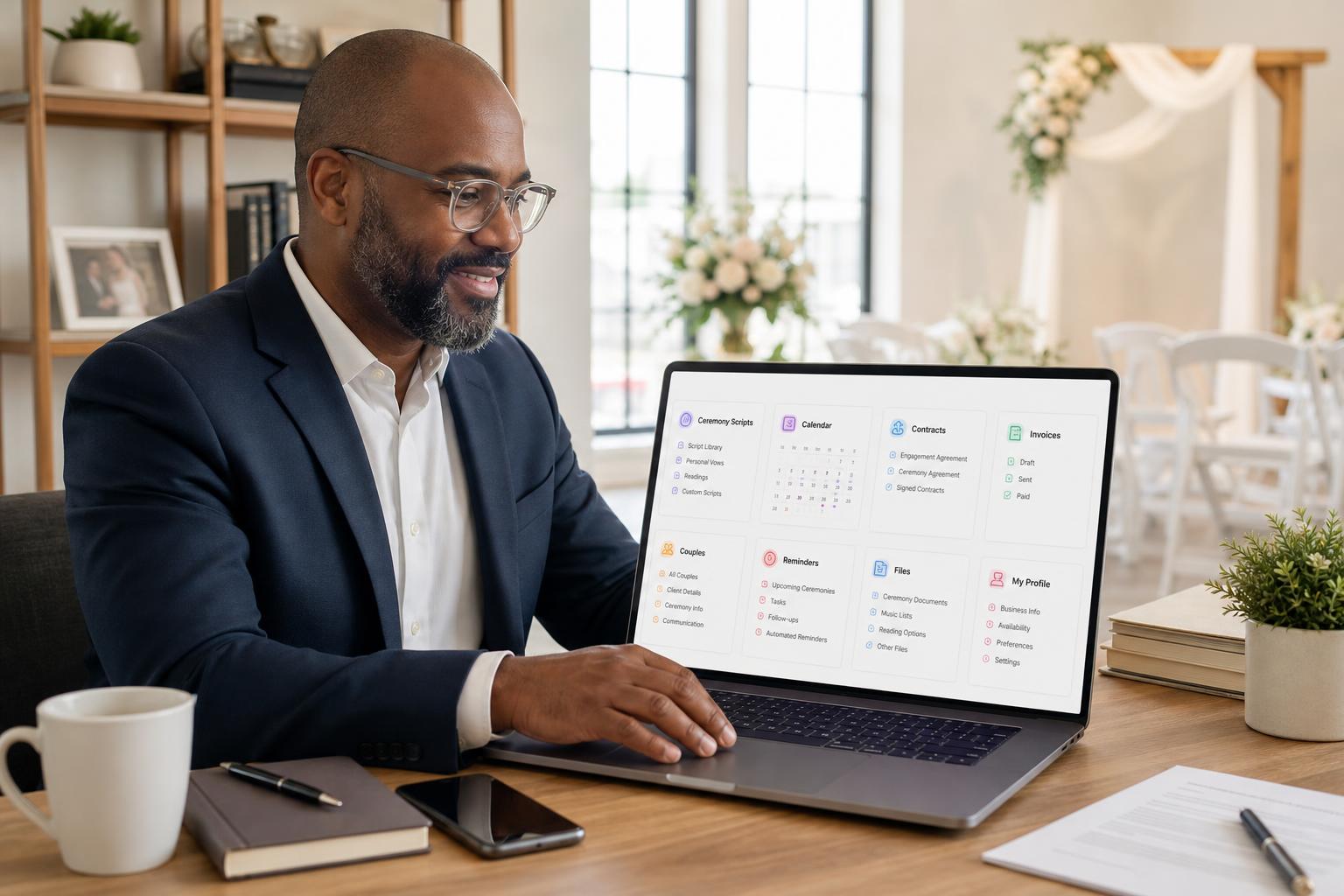
Best Wedding Officiant Software Features for Managing Ceremonies
Managing wedding ceremonies involves more than standing at the altar. Professional officiants often coordinate couples, scripts, schedules, contracts, invoices, reminders, documents, and follow-up communication at the same time. The right wedding officiant software can bring those moving parts into one organized workspace.
This guide explains the most useful features to compare and shows how OrdainedPro is designed to support the full ceremony workflow.
What should wedding officiant software help you manage?
Good software should reduce the need to switch between spreadsheets, email threads, cloud folders, calendar apps, payment tools, and document-signing platforms. It should give you a clear view of every ceremony from the first inquiry through the final follow-up.
When comparing platforms, look for features that help you:
- Organize each couple and ceremony in one place.
- Draft, personalize, save, and share ceremony scripts.
- Track dates, meetings, deadlines, and reminders.
- Send contracts and monitor signatures.
- Create invoices and track deposits or balances.
- Store files, notes, questionnaires, and venue details.
- Present a professional profile to prospective couples.
These priorities reflect the way ceremony planning is usually collaborative. Wedding-industry guidance emphasizes learning about the couple, understanding their desired tone and traditions, and tailoring the script to their relationship and wedding day. The Knot’s officiant script guidance provides useful context for why client collaboration and script organization matter.
1. Couple and ceremony management
The first essential feature is a client record that keeps the important details together. A useful record may include names, contact information, ceremony date, venue, guest count, ceremony type, planning notes, payment details, and outstanding tasks.
Without a central record, small details can become scattered across messages and documents. With one, you can quickly answer practical questions such as whether the couple has approved the ceremony outline, whether a planning meeting is scheduled, or whether a balance remains open.
OrdainedPro is built around a ceremony workspace that can organize couples, ceremony dates, private notes, timelines, venue information, guest counts, and payment basics. Learn more about OrdainedPro’s officiant workspace.
2. Script creation and collaboration
Script tools should support your judgment and writing style rather than make every ceremony sound identical. Look for the ability to save templates, collect couple responses, add personal stories, include readings or rituals, and share drafts for review.
A strong workflow lets you move from discovery questions to an outline, then from an outline to a draft and final ceremony script. It should also make it easy to find the correct version before the rehearsal or wedding day.
Consider whether the platform supports:
- Reusable ceremony templates.
- Style or tone notes.
- Couple questionnaires and private notes.
- Draft sharing and feedback.
- Version control or clear final-file organization.
- Printable or downloadable ceremony materials.
OrdainedPro highlights script writing, shared planning, document uploads, script drafts, and writing assistance as part of its officiant workflow. Any automated drafting should be reviewed and personalized by the officiant before it is used in a ceremony.
3. Calendar, scheduling, and reminders
Calendar tools are especially valuable when you manage multiple ceremonies, consultations, rehearsals, travel days, and personal commitments. At minimum, software should let you record ceremony dates and planning meetings. Better systems also support appointment booking, reminders, tasks, and calendar synchronization.
Shared calendars and event attachments can help keep schedules and relevant documents together. Google Calendar, for example, describes shared calendars, appointment booking, reminders, and file attachments as tools for coordinating schedules and event details. Review Google Calendar’s scheduling and collaboration features.
OrdainedPro can connect ceremony planning with Google Calendar invitations and video-call links, helping you schedule conversations without rebuilding the same event in several systems.
Ask yourself: Which deadlines are easiest for you to miss today—script approvals, balance reminders, rehearsals, or final venue confirmations?
Example: We often forget to confirm the final script and ceremony arrival details during the week before the wedding, so automated reminders would help us stay consistent.
Short answer: Automate the deadlines you repeat.
4. Contracts and e-signatures
Professional officiants need a consistent way to present service terms and track whether each client has completed the required signing steps. Software can make this process easier by storing the agreement with the couple’s record and showing which parties have signed.
Look for tools that allow you to:
- Use your own agreement or an approved template.
- Send documents for electronic signature.
- See signing status at a glance.
- Store the completed document with the client record.
- Keep contract versions organized.
Wedding planning guidance commonly recommends putting important arrangements with vendors in writing, including basic information such as the date, location, and time. The Knot’s ceremony-site checklist discusses documenting ceremony and officiant arrangements.
OrdainedPro states that officiants can create or use a default contract, send it for signing, and view who has signed. Review every template with an appropriately qualified professional for your business and location. This article does not provide legal advice.
5. Invoices, payments, and business visibility
Payment features can help you track deposits, balances, invoices, refunds, and payment history without maintaining a separate manual ledger. They are most useful when the financial status of each ceremony is visible alongside the client and event details.
When comparing software, check whether it supports:
- Custom service packages or line items.
- Deposits and scheduled payments.
- Invoice status and due-date reminders.
- Receipts or payment records.
- Refund tracking.
- Exportable records for your bookkeeping workflow.
OrdainedPro promotes payment tracking, invoices, balances, refunds, and business snapshots across ceremonies. Payment processing, tax treatment, reporting, and bookkeeping requirements can vary, so confirm the details with your accountant or financial professional.
6. Files, messages, and shared planning
Important ceremony information may arrive as questionnaires, readings, vows, venue instructions, identification documents, floor plans, or rehearsal notes. A platform with organized file storage and client communication can reduce the risk of searching through old email threads.
Useful file and collaboration features include:
- File uploads connected to the correct couple.
- Private officiant notes.
- Shared client documents.
- Searchable messages.
- Tasks linked to a ceremony.
- Clear permissions for sensitive information.
Google Workspace describes cloud storage, file sharing, and shared calendars as small-business collaboration tools. Explore Google Workspace’s small-business collaboration overview.
OrdainedPro combines messaging, shared planning, file uploads, script drafts, meetings, and tasks within its officiant-focused workflow. Before adopting any platform, review its privacy, security, retention, and access controls for the type of information you handle.
7. Public officiant profiles and visibility
A professional profile can make it easier for prospective couples to understand your services, ceremony style, location, availability, and experience. It may also give you one link to share in email, social media, or referral conversations.
Look for profile tools that let you control:
- Your service description.
- Ceremony types and traditions you support.
- Your service area.
- Contact or inquiry options.
- Reviews or testimonials.
- Links to your website or social profiles.
OrdainedPro includes a public officiant profile designed to showcase services, collect reviews, and give couples a way to learn more about you. Keep profile language accurate and avoid implying legal, religious, or ordination authority that you cannot document.
8. Ease of use matters more than a long feature list
The best wedding officiant software is not necessarily the platform with the most buttons. It is the one you can use consistently while traveling, meeting couples, preparing scripts, and handling wedding-day changes.
Before choosing a platform, test how quickly you can complete common tasks:
- Add a new couple.
- Create a ceremony date and planning task.
- Send a questionnaire or message.
- Upload a document.
- Draft or share a script.
- Send a contract.
- Record a payment or invoice.
- Find the final ceremony details later.
Google’s guidance on helpful content emphasizes clear organization, useful information, trust, and satisfying the reader’s goal. Those principles also apply to software selection: choose a system that makes your work clearer rather than adding complexity. Read Google’s people-first content guidance.
Why OrdainedPro stands out for officiants
OrdainedPro is positioned as an officiant-specific workspace rather than a collection of disconnected general-purpose tools. Its feature set is designed around the ceremony lifecycle: couples, scripts, planning conversations, calendar events, contracts, invoices, reminders, documents, payments, and professional profiles.
That focus can be useful for officiants who want fewer handoffs between systems. Instead of adapting a generic customer relationship manager or project-management tool to wedding ceremonies, you can evaluate a workflow built around the work officiants actually perform.
To compare your current process with an officiant-focused platform, visit the OrdainedPro portal or explore the OrdainedPro website.
How to choose the right platform
Start with your most common operational problem. If scripts are scattered, prioritize script and file organization. If you miss follow-ups, prioritize reminders and tasks. If payments are difficult to track, prioritize invoices and balances. If inquiries are inconsistent, look for profiles and client-management tools.
Then confirm the practical details: pricing, integrations, mobile access, export options, support, data controls, and whether the platform fits the size of your business. A short trial or guided demonstration can help you test the workflow before moving active couples into the system.
Conclusion
The best wedding officiant software should help you protect your time, personalize ceremonies, communicate clearly, and present a dependable experience to every couple. The most valuable features are usually the practical ones: organized client records, collaborative scripts, calendars, reminders, contracts, invoices, files, profiles, and an interface you will actually use.
For officiants who want those functions in one ceremony-focused workspace, OrdainedPro is a strong platform to evaluate.
Frequently Asked Questions
What is wedding officiant software?
Wedding officiant software is a business and ceremony-management platform that can help officiants organize couples, scripts, schedules, contracts, invoices, reminders, files, payments, and professional profiles.
What features should wedding officiant software include?
Look for couple management, script collaboration, calendar tools, reminders, contracts, electronic signatures, invoices, payment tracking, file storage, messaging, tasks, profiles, and simple navigation.
Can wedding officiant software help with ceremony scripts?
Yes. Some platforms support templates, questionnaires, private notes, draft sharing, writing assistance, and script file organization. The officiant should always review and personalize the final script.
Does OrdainedPro include contracts and invoices?
OrdainedPro's website describes contract workflows, electronic signatures, invoices, balances, refunds, payment tracking, and business snapshots. Review current plan details and feature availability before subscribing.
Can OrdainedPro help officiants manage couples and calendars?
Yes. OrdainedPro describes tools for organizing couples, ceremony details, planning conversations, tasks, meetings, Google Calendar invitations, and video-call links.
Is wedding officiant software a replacement for legal advice or accounting advice?
No. Software can help organize business information, but it does not determine whether an officiant is legally authorized to perform a marriage, whether a contract complies with local law, or how income and taxes should be handled. Consult the appropriate government office, attorney, or financial professional.
Leave a Reply