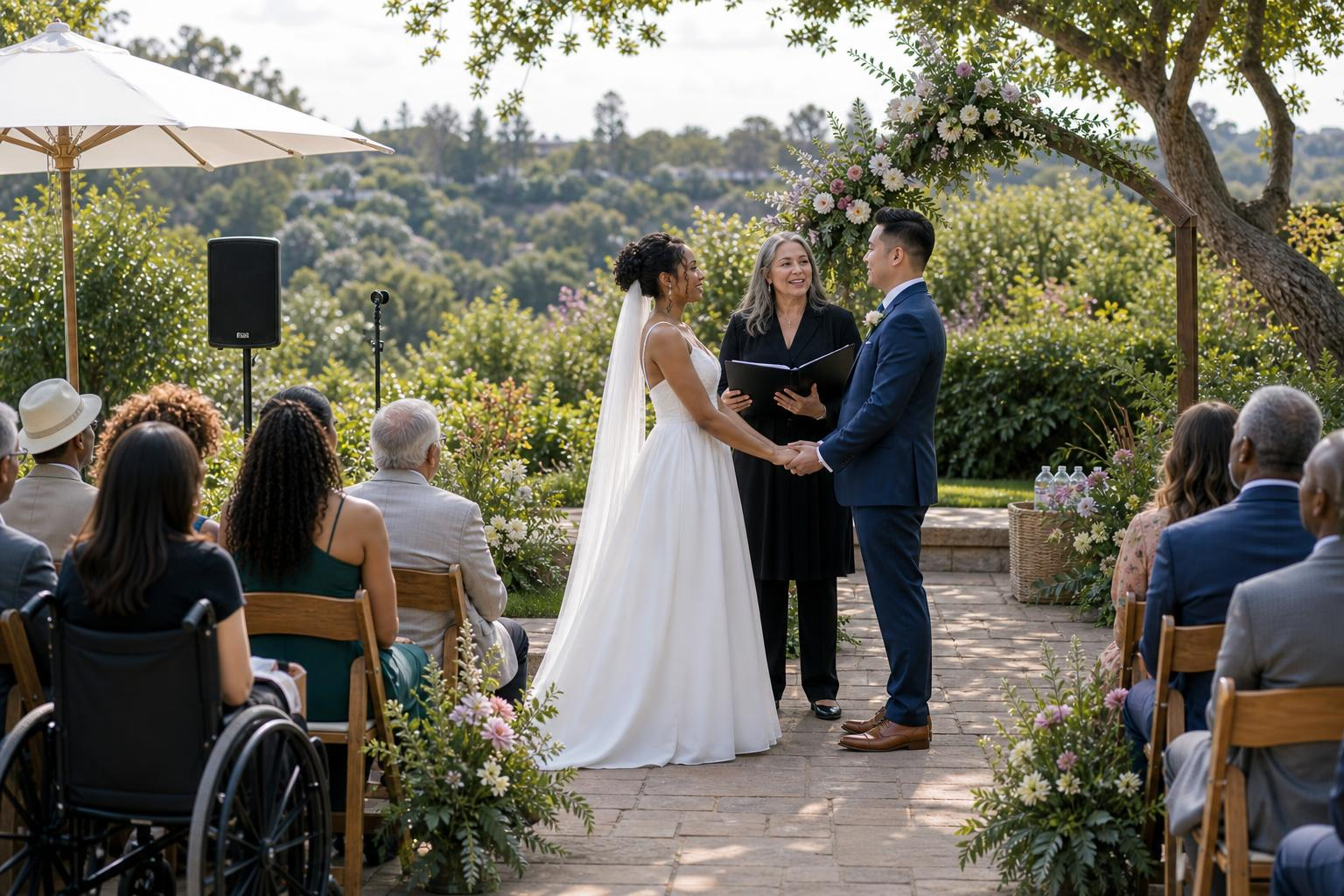
Outdoor Wedding Ceremony Tips for Officiants
Outdoor ceremonies can feel personal, beautiful, and relaxed, but they also require more operational planning than ceremonies held indoors. As the officiant, you may be the person who notices a weather risk, confirms the ceremony setup, protects the marriage license, or calmly explains a last-minute change.
Use these outdoor wedding ceremony tips to prepare for wind, heat, rain, sun, sound, accessibility, permits, and backup plans while keeping the ceremony focused on the couple.
1. Build a weather plan before the wedding day
Do not treat the weather plan as a vague promise to “see what happens.” Decide in advance who monitors the forecast, who can move furniture or decorations, who contacts the couple, and what conditions require a delay, relocation, or cancellation.
The National Weather Service recommends planning for outdoor events, monitoring changing conditions, and having clear procedures for dangerous weather. If thunder is heard or lightning is seen, move guests to a substantial enclosed building or a hard-topped vehicle. Small sheds, tents, and open shelters may not provide adequate lightning protection. Follow local emergency guidance and venue procedures.
- Check the forecast several days before the ceremony and again on the wedding day.
- Assign one responsible weather monitor instead of asking everyone to watch the sky.
- Identify the safest indoor shelter and the walking route to it.
- Decide how guests will receive instructions if the ceremony is delayed.
- Wait for the venue’s or weather professional’s all-clear before resuming outdoor activities.
For a practical reference, review the National Weather Service weather safety guidance and its lightning safety guidance for organized outdoor activities.
2. Prepare for wind, rain, and sun
Wind affects more than the ceremony backdrop. It can move programs, extinguish candles, distort microphones, lift lightweight décor, and make it difficult for guests to hear the vows. Ask the venue or planner how arches, umbrellas, signage, floral arrangements, and sound equipment will be secured.
Rain planning should include more than a tent. Confirm whether the alternate location can hold the guest count, accommodate the ceremony party, and support the sound system. If the couple plans to use a tent, ask the venue or rental company about safe installation, weather limits, drainage, and evacuation procedures.
Sun can also affect the ceremony. Consider the sun’s position at the ceremony time, glare for the couple and guests, shade for older adults and children, and whether the officiant will be able to read the ceremony script without squinting.
- Use weighted or secured décor rather than loose items.
- Keep printed scripts in a folder or binder that will not blow open.
- Bring clips, backup copies, and a method for protecting paper from rain.
- Position the couple and officiant to reduce glare and avoid facing the strongest sun.
- Offer shade, water, and seating options when conditions are hot.
3. Plan for heat and guest comfort
Heat can affect concentration, mobility, and the ability of guests to remain comfortable during even a short ceremony. The National Weather Service recommends hydration, light clothing, shade, cooling areas, and prompt attention to symptoms such as dizziness or weakness.
Coordinate with the couple and venue about water stations, shaded seating, fans, cooling towels, shorter readings, and a clear location where guests can cool down. Avoid making guests feel embarrassed if they need to sit, leave the ceremony area, or seek assistance.
Be especially attentive to older guests, young children, pregnant guests, and people with health conditions. Do not diagnose or provide medical advice; instead, direct anyone who feels unwell to venue staff, emergency services, or their own medical professional.
4. Make the ceremony easy to hear
Outdoor sound is unpredictable. Wind, traffic, fountains, nearby conversations, aircraft, and lawn equipment can compete with the vows. Test the microphone from the guest seating area, not just beside the officiant.
- Use a microphone suited to the venue and expected guest count.
- Ask the sound technician to test the couple’s voices as well as the officiant’s.
- Keep a printed or digital copy of the ceremony script available if equipment fails.
- Place speakers so sound travels toward guests without creating feedback.
- Establish a simple signal for pausing if the officiant or couple cannot be heard.
Speak more slowly than you might indoors, pause between sections, and face the guests when possible. If wind makes a page difficult to read, stop briefly rather than rushing through an important moment.
5. Check accessibility from arrival to departure
Accessibility is not limited to the ceremony chairs. Walk the complete guest route from parking or drop-off to seating, restrooms, the ceremony space, and the backup location. Look for gravel, steep slopes, soft grass, steps, narrow paths, glare, low branches, and uneven ground.
The ADA 2010 Standards for Accessible Design address accessible routes, seating, and lawn or exterior seating areas. Requirements can depend on the venue, event type, and responsible organization, so coordinate with the venue and consult qualified accessibility or legal professionals when needed.
- Confirm an accessible route to the ceremony area.
- Reserve spaces where wheelchair users and companions can sit together.
- Provide stable ground and adequate space near the aisle.
- Check whether the backup location is equally accessible.
- Ask the couple whether guests need communication, seating, or mobility accommodations.
Question: Can every invited guest reach the ceremony, use the available seating, and move to the backup location without unnecessary barriers?
Example: The couple chooses a garden ceremony, so the planner creates a firm path from drop-off to seating and reserves companion seating near the aisle.
Short answer: Accessible routes, seating, and backup access.
6. Confirm permits and venue rules
Outdoor ceremonies may involve venue policies, park rules, noise restrictions, parking limits, fire rules, amplified-sound requirements, or reservation conditions. The officiant may not be responsible for obtaining every permit, but you should know who is responsible and what restrictions could affect the ceremony.
For ceremonies in a national park, review the National Park Service weddings and special events information. Local parks, beaches, historic sites, and private venues may have separate requirements. Confirm details with the relevant park office, venue, municipality, or permitting authority rather than relying on general assumptions.
- Ask whether the ceremony location requires a reservation or permit.
- Confirm rules for chairs, arches, candles, generators, amplified sound, and décor.
- Find out whether the permit must be present on site.
- Record the responsible contact person and an after-hours phone number.
- Verify that the backup location is allowed under the reservation or permit.
For state marriage-law or officiant-requirement research, use the OrdainedPro Maps starting point, then confirm the current requirements with the appropriate government marriage authority.
7. Protect the marriage license and ceremony documents
Outdoor conditions create extra risks for paper documents. Keep the marriage license, ceremony script, readings, vows, and any required forms in a sealed document pouch or weather-resistant folder. Do not leave the license on an unattended table, in direct sun, or where rain and spilled drinks can reach it.
Before the ceremony, confirm who has the license, when it must be signed, which parties must sign, and how it will be returned or filed. Follow the instructions from the issuing marriage authority. Do not guess about deadlines, signatures, witnesses, filing procedures, or whether a particular officiant is authorized.
After signing, place the license directly into the agreed secure envelope or document holder. If the couple, venue, or officiant is responsible for returning it, confirm that responsibility in writing.
8. Create a calm backup plan
A backup plan works best when guests do not have to debate what happens next. Write a short sequence for weather delays or relocation: who makes the call, who tells the couple, who directs guests, where the ceremony moves, and how the officiant receives the updated location.
Prepare a shorter version of the ceremony if heat, rain, or guest mobility makes a long service impractical. Keep the couple’s priorities in mind, but never continue an outdoor ceremony when conditions create a serious safety concern.
- Pause the ceremony and explain that safety comes first.
- Direct the wedding party and guests to the predetermined location.
- Move the ceremony documents and sound equipment with the designated team.
- Confirm the couple’s preferred ceremony order.
- Begin again only after the location is ready and conditions are appropriate.
9. Coordinate with the couple and vendor team
The officiant should not be expected to manage every outdoor detail alone. Schedule a brief coordination call or site walk with the couple, planner, venue contact, photographer, sound technician, and anyone responsible for weather monitoring.
Review the ceremony start time, guest arrival route, sun direction, sound test, accessibility route, document handling, weather decision time, and backup location. Put the final plan in writing so everyone has the same instructions.
Conclusion
The best outdoor wedding ceremony tips are simple: plan for changing weather, protect guests from heat and sun, make the ceremony audible and accessible, confirm venue and permit responsibilities, protect the marriage license, and rehearse the backup plan. A prepared officiant helps the couple stay present while the team handles practical details safely and respectfully.
Frequently Asked Questions
What should an officiant bring to an outdoor wedding ceremony?
Bring the ceremony script, backup copies, a weather-resistant document holder, pens, vow or reading copies, water, and any items required by the couple or venue. Keep the marriage license secure and follow the issuing authority’s handling instructions.
How should an officiant handle rain at an outdoor ceremony?
Use the predetermined backup plan rather than making an improvised decision. Confirm that the alternate location is safe, accessible, large enough, and permitted for the ceremony, then communicate the change calmly to the couple and guests.
What should an officiant do if there is lightning?
Pause or stop the outdoor ceremony and direct guests to a substantial enclosed building or a hard-topped vehicle. Follow the venue’s emergency procedures and National Weather Service guidance, including waiting for an appropriate all-clear before returning outdoors.
How can an outdoor ceremony be more accessible?
Check the full route from arrival through the ceremony and backup location. Provide stable paths, accessible seating with companion space, clear aisle access, shade or rest areas where appropriate, and communication accommodations coordinated with the venue and couple.
Does an outdoor wedding ceremony require a permit?
It may, depending on the property owner, park, municipality, venue rules, event size, sound equipment, and location. The couple or venue should confirm requirements with the relevant permitting authority. State-specific and local requirements should be reviewed before publication or use.
How do officiants protect the marriage license outdoors?
Keep it in a secure, weather-resistant document holder and away from rain, direct sun, drinks, and unattended tables. Confirm in advance who handles signatures and filing, and follow the exact instructions of the issuing marriage authority.