How to Get Ordained Online and Officiate a Wedding
When a friend or family member asks you to officiate their wedding, the role can feel both meaningful and intimidating. The process usually involves choosing an ordination organization, checking the rules where the ceremony will take place, preparing the couple’s ceremony, and handling the marriage paperwork carefully.
This beginner-friendly guide explains how to get ordained online and prepare to officiate a wedding. Because marriage requirements differ by state, county, city, and sometimes religious organization, use this article as a planning overview—not legal advice.
What Does It Mean to Be Ordained?
Ordination is a form of recognition or authorization provided by a religious or spiritual organization. An ordained person may serve in religious, spiritual, or ceremonial roles, depending on the organization’s beliefs and policies.
Online ordination is often completed through an organization’s website. Some organizations offer a free application, while others offer optional certificates, credentials, training, or minister supplies for a fee. Before choosing an organization, review its policies and confirm what documentation it provides.
An ordination certificate by itself does not automatically answer whether you may legally perform a marriage ceremony in a particular location. The law of the place where the ceremony occurs controls the relevant marriage and officiant requirements.
How to Get Ordained Online
- Research the organization. Read its beliefs, ordination terms, documentation options, and privacy or membership policies.
- Complete the online application. Many organizations ask for basic identifying information and confirmation that you accept their principles.
- Save your confirmation. Download or securely store your ordination confirmation, certificate, minister ID, and any other records.
- Order documentation only if needed. A county clerk or other authority may ask for proof of ordination, a letter of good standing, or additional information.
- Check local requirements before accepting the role. Do not wait until the wedding week to find out whether registration, credential review, or a special designation is required.
For example, the Universal Life Church describes an online ordination process and advises prospective officiants to review location-specific requirements before performing a ceremony. Its guidance is useful for understanding the general process, but it is not a substitute for checking the applicable government office.
Important: An ordination organization’s statement that its ministers may officiate weddings is not a guarantee that every state or local authority will recognize the ordination in every situation.
Check the Marriage Rules Where the Ceremony Will Take Place
The couple’s residence and the officiant’s residence may be different from the ceremony location. Start with the state, county, city, or town where the wedding will occur. Government requirements may address who may officiate, whether the officiant must register, what documents are accepted, who completes the marriage license, and how the completed license must be returned.
Use OrdainedPro’s marriage-law map as a practical starting point for identifying the relevant jurisdiction. Then confirm the current requirements directly with the appropriate government office, such as a county clerk, town clerk, recorder, probate court, or vital records office.
USA.gov’s marriage-law information directs people to state and local resources because marriage procedures vary by location. USA.gov also explains that a marriage license legally allows a couple to marry, while a marriage certificate serves as proof that the marriage took place.
Ask the issuing office questions such as:
- Who is legally permitted to perform the ceremony?
- Is online ordination accepted for this ceremony location?
- Must the officiant register before the wedding?
- Are proof of ordination or other credentials required?
- What portions of the marriage license must the officiant complete?
- Who returns the license, and what is the deadline?
- Are there special rules for ceremonies held in another city, county, or state?
Keep written notes, links, names, and dates from your conversation with the government office. Requirements can change, and a clear record helps the couple and officiant stay organized.
Understand the Difference Between the Ceremony and the Paperwork
A wedding ceremony can be personal, spiritual, secular, humorous, traditional, or highly formal. The marriage paperwork is a separate administrative responsibility. A beautiful ceremony does not replace the required license, signatures, registration, or filing steps.
Before the wedding, confirm that the couple has obtained the correct marriage license and understands its expiration date, waiting period, identification requirements, and other local instructions. USA.gov notes that license expiration periods vary by state, so the couple should verify the dates with the issuing office.
After the ceremony, follow the local instructions for completing and returning the license. Never guess about a deadline or assume that the venue, photographer, planner, or couple will handle a task assigned to the officiant.
Plan the Ceremony With the Couple
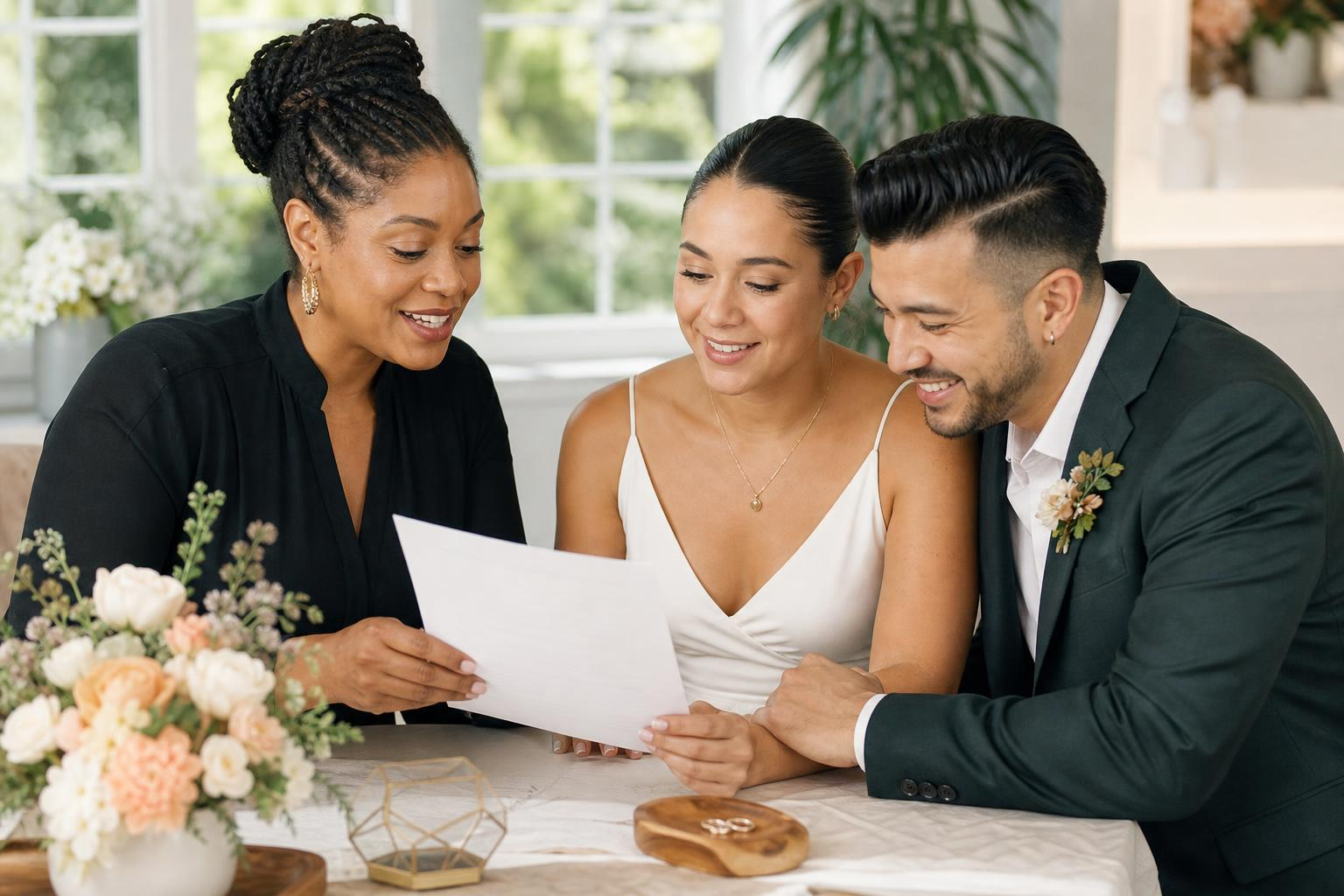
Once the legal and administrative questions are clear, focus on the experience you will create together. Meet with the couple to discuss their story, values, preferred tone, cultural or religious traditions, readings, music, vows, unity rituals, and any topics they want included or avoided.
A practical ceremony outline may include:
- Processional and opening music
- Welcome and acknowledgment of guests
- Introduction to the couple’s relationship
- Readings, prayers, poems, or cultural traditions
- Statement of intent or other required language
- Exchange of vows and rings
- Pronouncement or closing declaration
- Instructions for the recessional and photographs
OrdainedPro can help you organize these elements into a ceremony that sounds natural and reflects the couple. Use a ceremony builder or planning workspace to collect details, arrange the order of service, draft transitions, and prepare a readable final script.
What kind of atmosphere should the ceremony create for the couple and their guests?
Example: We are envisioning a warm, relaxed ceremony with a short personal story, inclusive language, and a brief family reading.
Short answer: Warm, relaxed, personal, inclusive.
Write and Practice the Officiant Script
Start with a simple structure rather than trying to write every sentence from scratch. A useful script should tell you what happens next, identify who speaks, and include any required language or instructions supplied by the local authority.
As you draft, keep the couple’s voice at the center. Avoid private stories that could embarrass them, jokes that require inside knowledge, or religious language they have not approved. If the ceremony includes faith traditions, confirm the wording and pronunciation with the couple or an appropriate religious adviser.
Practice the script aloud several times. Mark pauses, names, pronunciations, music cues, readings, ring exchanges, and moments when the couple should face one another or respond. Time the ceremony so you know whether it fits the schedule.
Bring a printed copy and a backup digital copy. Use large type, clear headings, and page numbers so you can recover easily if the pages shift or the ceremony becomes emotional.
Prepare for the Wedding Day
- Arrive early and confirm where the ceremony party will stand.
- Check the microphone, music cues, and lighting if applicable.
- Keep the marriage license in a secure folder.
- Confirm the couple’s names and preferred pronunciations.
- Review the ceremony order with the planner or venue coordinator.
- Ask who will hold the rings and cue the processional.
- Have water available and silence phone notifications.
- Know who is responsible for returning the completed marriage license.
Your job is to guide the ceremony calmly, not to perform a flawless theatrical production. Speak slowly, make eye contact, and pause when needed. If something unexpected happens, take a breath and follow the next clear instruction in your script.
Common Mistakes to Avoid
- Assuming online ordination is accepted everywhere: verify the ceremony location’s requirements.
- Waiting until the last minute: credential reviews and registration procedures may take time.
- Using a generic script: collaborate with the couple so the ceremony feels like theirs.
- Ignoring paperwork: confirm who completes and returns the marriage license.
- Overloading the ceremony: choose a few meaningful readings, stories, or rituals instead of including everything.
- Failing to rehearse: reading aloud reveals timing, awkward transitions, and pronunciation issues.
How OrdainedPro Can Help
Getting ordained online is only the first step. OrdainedPro helps officiants move from a completed ordination to a prepared ceremony by providing practical planning support, ceremony-building tools, and resources for organizing the couple’s preferences.
Begin with the OrdainedPro marriage-law map for location research, then use the platform to shape the ceremony flow and prepare a script that is clear, personal, and easy to deliver.
Conclusion
To get ordained online and officiate a wedding, choose an organization carefully, save your credentials, verify the local rules, coordinate with the couple, prepare the marriage paperwork, and rehearse the ceremony. Treat legal requirements as location-specific and confirm them with the appropriate government office before the wedding date.
With thoughtful preparation and the right planning tools, you can lead a ceremony that feels organized, respectful, and genuinely meaningful to the couple.
Sources and Further Reading
Frequently Asked Questions
How long does it take to get ordained online?
The application time depends on the ordination organization. Some organizations offer an online application that can be completed quickly, but you should allow additional time to obtain documents and confirm whether the ceremony location requires registration or credential review.
Can anyone get ordained online and officiate a wedding?
Many organizations allow adults to apply for online ordination, but legal authority to perform a marriage depends on the law and procedures of the location where the ceremony takes place. Confirm the requirements with the relevant government office before the wedding.
Do I need to register after getting ordained online?
Possibly. Some jurisdictions may require an officiant to register, submit proof of ordination, obtain a special designation, or complete other paperwork. Requirements vary, so check the ceremony location and use the OrdainedPro marriage-law map as a starting point.
What does a wedding officiant do?
A wedding officiant typically guides the ceremony, delivers the welcome and other approved remarks, leads vows or declarations, coordinates the ring exchange, makes the closing pronouncement when appropriate, and completes any assigned marriage-license responsibilities.
Can OrdainedPro help me write a wedding ceremony?
Yes. OrdainedPro is designed to help officiants organize ceremony details, collaborate with the couple, build a ceremony structure, and prepare a polished script for the wedding day.
Is getting ordained online the same as receiving legal advice?
No. Online ordination information is not legal advice, and an ordination organization cannot replace confirmation from the government office responsible for marriage records in the ceremony location.