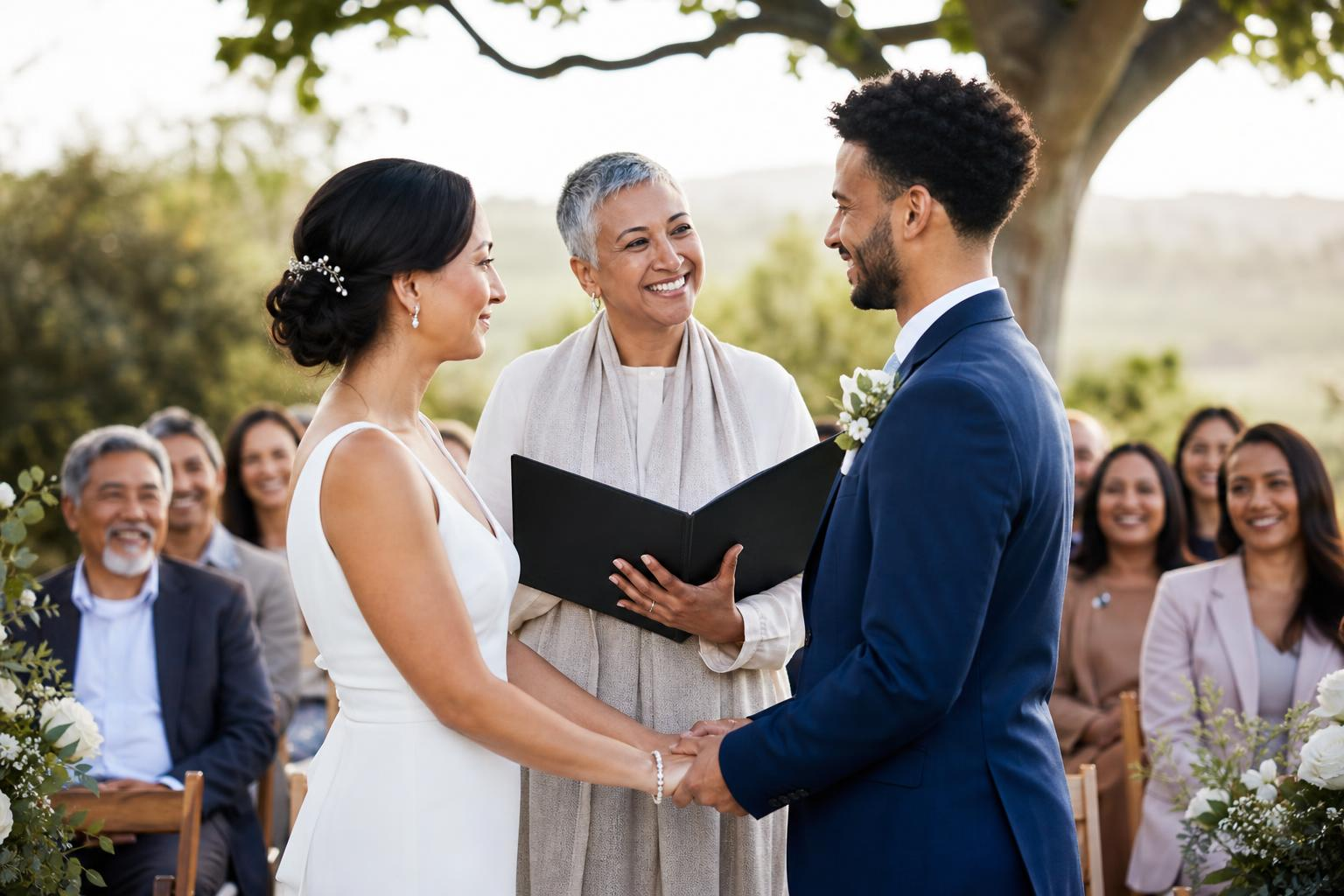
Can anyone officiate a wedding? Not automatically. In the United States, the person who leads your ceremony must meet the legal requirements of the location where your marriage takes place. Those requirements can vary by state, county, city, religious organization, and ceremony type.
A friend or family member may be able to officiate after becoming ordained or completing another local authorization process. However, ordination alone does not guarantee that the person can legally solemnize a marriage everywhere. Before making plans, confirm the rules with the marriage-license office that will issue your license.
What does a wedding officiant do?
A wedding officiant leads the ceremony and may guide the couple through vows, ring exchanges, readings, pronouncements, and other meaningful elements. For a legal marriage, the officiant may also need to complete and return the marriage license according to local instructions.
The officiant’s ceremonial role and legal role are related but not identical. Someone may be excellent at writing and delivering a ceremony but still lack the authority required to sign or return a marriage license in a particular location.
Who can officiate a wedding?
Depending on the jurisdiction, legally recognized officiants may include members of the clergy, judges, magistrates, public officials, authorized civil celebrants, or people who complete a temporary or one-time authorization process. Some locations also recognize other categories of officiants.
Because the list is not the same everywhere, avoid relying only on a general internet answer or a previous wedding experience. The most reliable starting point is the local office responsible for marriage licenses and vital records. USAGov explains that couples should contact the government office where they are getting married for local marriage-license information, and state-law resources can help identify the appropriate legal sources.
For a location-specific starting point, visit OrdainedPro’s marriage-law and officiant requirements map. Use it as a planning resource, then verify final requirements with the relevant government office.
Does getting ordained make someone legally qualified?
Sometimes, but not always. Online ordination may satisfy the requirements in one jurisdiction and create uncertainty in another. Some locations may recognize an ordained minister, while others may require additional registration, documentation, an officiant number, a one-time designation, or another form of approval.
The religious organization that provides ordination may also have its own rules about who may perform ceremonies, what credentials are issued, and whether the ordination is intended for religious ministry, civil ceremonies, or both. Couples should confirm both the organization’s requirements and the government’s requirements.
OrdainedPro can help officiants prepare for ceremonies and understand common planning steps, but no platform can replace confirmation from the office that controls marriage records in the ceremony location.
Can a friend or family member officiate?
In many places, a friend or family member may be able to officiate if they complete the required process before the ceremony. That process may involve ordination, registration, an application, a fee, a background check, a temporary appointment, or other documentation. In other locations, a personal choice of officiant may not be legally available in the same way.
If you are considering someone close to you, ask: What matters most about having this person officiate—your relationship, their speaking style, their religious role, or the legal convenience?Example: We want my sister to tell our story and lead the vows, but we also want the legal paperwork handled with as little uncertainty as possible.Short answer: Personal connection plus legal backup.
One possible approach is to separate the legal and ceremonial roles when local law allows it. For example, an authorized officiant could complete the legal portion while a friend or relative leads a larger celebration. Whether that arrangement works depends on the location and the couple’s chosen ceremony format, so confirm it in advance.
What should you check before hiring or choosing an officiant?
- Confirm the ceremony location. Rules are usually tied to where the marriage is solemnized, not simply where the couple lives.
- Ask the marriage-license office who may officiate. Request current instructions for officiant eligibility, registration, signatures, witnesses, deadlines, and license return procedures.
- Check whether credentials must be submitted. Some jurisdictions may request proof of ordination or authorization before or after the ceremony.
- Confirm filing responsibilities. Find out who completes the license, who returns it, how it must be returned, and when it is due.
- Review the officiant’s service agreement. If you hire a professional, clarify the ceremony length, rehearsal availability, travel, cancellation terms, payment, and backup plan.
- Plan for unexpected problems. Ask what happens if the officiant becomes ill, arrives late, loses paperwork, or cannot complete the legal portion.
What if the ceremony is spiritual but not legal?
A couple may choose a symbolic, spiritual, religious, commitment, or renewal ceremony that is separate from the legal marriage process. In that situation, the ceremony can often be designed around the couple’s values and community, but it should not be described as legally completing the marriage unless the required legal steps have been completed.
Some couples complete the legal paperwork before the main celebration. Others arrange a brief legal ceremony and then hold a larger personalized ceremony later. The best option depends on the couple’s priorities, schedule, location, and applicable rules.
How do marriage licenses fit into the process?
A marriage license generally authorizes a couple to marry, while a marriage certificate is evidence that the marriage was recorded. USAGov advises couples to contact the vital records or local government office in the place where they are getting married for instructions on applying for a license and obtaining records.
License expiration periods, waiting periods, witness rules, signatures, filing deadlines, and correction procedures may differ. Because these details can change, check the issuing office’s current instructions rather than relying on an old form, blog post, or another couple’s experience.
For more general government guidance, review USAGov’s marriage license and certificate information. For broader state-law research, the National Conference of State Legislatures explains how to locate authoritative state legal resources through its guide to finding details on state laws.
Bottom line: Can anyone officiate a wedding?
Not necessarily. A person may be able to lead a beautiful ceremony without being legally authorized to solemnize a marriage. If you want your marriage to be legally recognized, confirm the officiant’s eligibility, ordination or authorization requirements, paperwork responsibilities, and filing deadlines with the appropriate local office.
With that foundation in place, couples can choose an officiant who fits their story, beliefs, communication style, and ceremony plans—without leaving the legal details to chance.
Frequently Asked Questions
Can anyone officiate a wedding?
No. Eligibility depends on the law of the place where the ceremony occurs. Some locations recognize clergy, judges, public officials, civil celebrants, or people who complete a temporary authorization process.
Does online ordination allow someone to officiate?
It may, but not everywhere. The couple and officiant should confirm whether the location recognizes the ordaining organization and whether registration, documentation, or additional approval is required.
Can my friend or family member officiate my wedding?
Possibly. A friend or family member may need to become ordained, register, apply for a one-time authorization, or satisfy another local requirement. Confirm the process with the marriage-license office before the ceremony.
Can someone conduct the ceremony if they cannot legally sign the marriage license?
Sometimes couples separate the legal and ceremonial roles, but the arrangement must comply with local law. Ask the issuing office whether a separate legal ceremony or authorized officiant is required.
Where can I check officiant requirements?
Start with the government office that issues marriage licenses in the ceremony location. You can also use the OrdainedPro marriage-law and officiant requirements map at https://maps.ordainedpro.com/ as a planning starting point.
What does the officiant do with the marriage license?
Responsibilities vary. The officiant may need to complete, sign, and return the license, while the couple may have separate duties. Confirm signatures, witnesses, deadlines, delivery methods, and correction procedures with the issuing office.