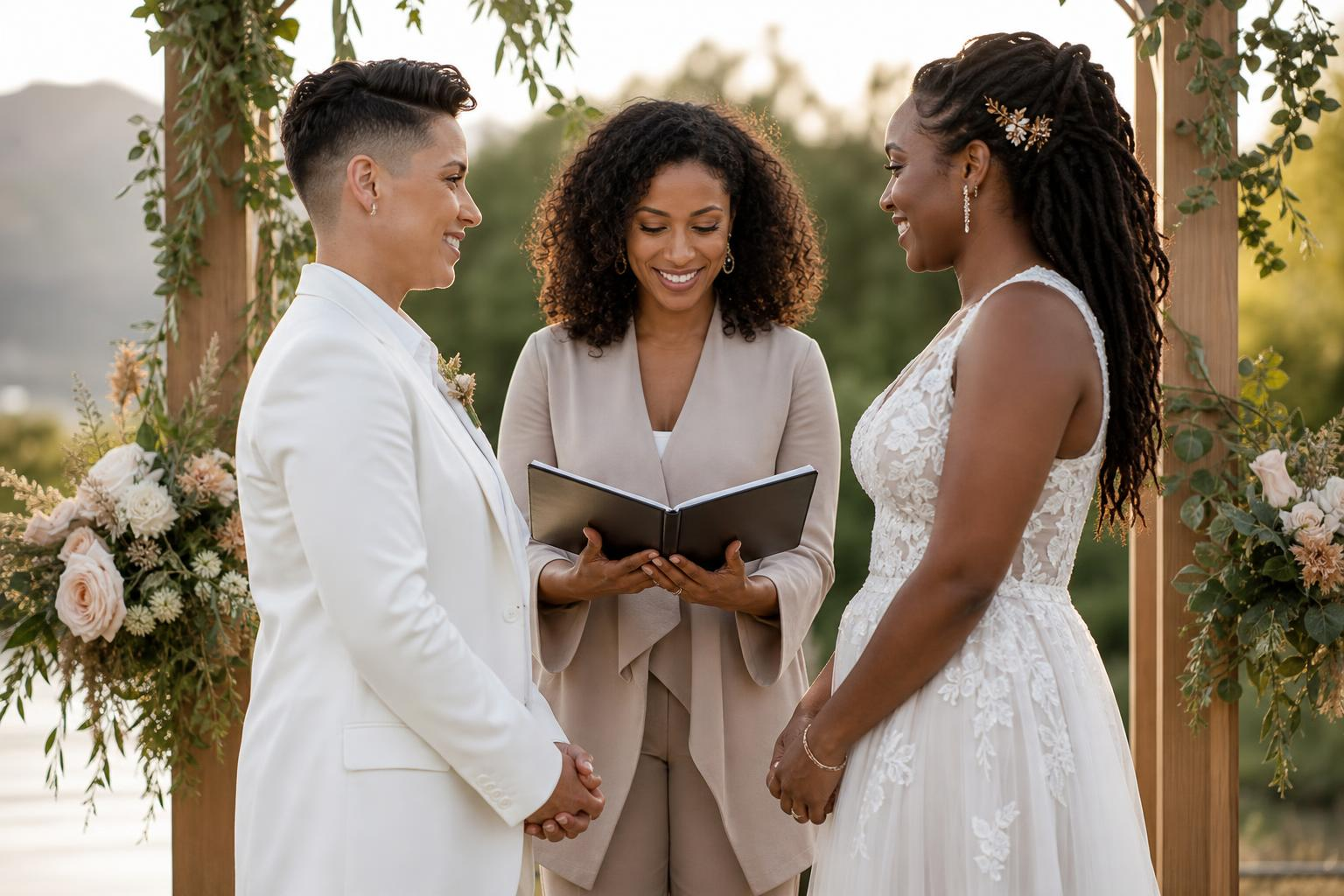
A modern wedding ceremony script should feel like the couple—not like a form being read aloud. The best ceremonies give guests enough structure to follow the moment while leaving room for personality, humor, culture, family, and real emotion.
As the officiant, your job is to create a steady path through the ceremony. You are not there to perform someone else’s idea of romance. You are there to help two people make meaningful promises in language they can actually say and remember.

This guide will help you shape a contemporary ceremony with inclusive wording, practical transitions, and personalization prompts that make the script easier to write and easier to deliver.
1. Start with a clear ceremony framework
A modern ceremony can be flexible, but it still benefits from a dependable order. A common structure includes the processional, welcome, remarks about the couple, reading or ritual, declaration of intent, personal vows, ring exchange, pronouncement, and recessional. This general sequence is also reflected in contemporary wedding ceremony outlines published by wedding-industry resources. Review a standard ceremony order before deciding which elements to keep, shorten, or rearrange.
| Ceremony section | Purpose | Modern approach |
|---|---|---|
| Welcome | Settle the room and acknowledge the gathering | Use warm, conversational language instead of a formal invocation |
| Couple-focused remarks | Explain what makes this relationship meaningful | Share two or three specific observations rather than a long biography |
| Reading or ritual | Add another voice, image, or tradition | Choose a poem, passage, cultural practice, or brief musical moment with purpose |
| Promises and vows | Give the couple a chance to speak directly | Offer personal vows, repeat-after-me vows, or a combination |
| Rings and pronouncement | Mark the commitment and close the ceremony | Keep the wording simple, clear, and easy for guests to hear |
Keep the framework visible. Even if the ceremony is highly personalized, label each section in your working draft. Those labels help you coordinate with the couple, readers, musicians, and venue team.
2. Choose language that welcomes the whole room
Inclusive language is more than replacing “bride and groom” with “partner.” It means noticing which assumptions your script makes about family, gender, religion, parents, and the shape of marriage.
Use the couple’s names and preferred terms consistently. Ask whether they want to be introduced as spouses, partners, married people, or by another phrase. If parents, stepparents, chosen family, or children are part of the couple’s story, make room for them without suggesting that one family structure is more legitimate than another.

For example, instead of saying, “Who gives this woman to be married?” you might say:
“Who supports Taylor and Morgan as they enter this marriage?”
That wording gives family and friends a chance to participate without framing marriage as a transfer of ownership. It also works for couples of many backgrounds and identities.
Ask before assuming. Confirm pronunciation, pronouns, titles, names of parents and grandparents, and whether any cultural or religious terms should be included. One careful conversation can prevent several uncomfortable moments on the wedding day.
A planning question worth asking
What should guests understand about your relationship by the time the ceremony ends?
Example: “We want people to see that our marriage is grounded in friendship, shared responsibility, and making room for both of our families.”
Short answer: Friendship, teamwork, and belonging.
3. Write the welcome and opening remarks
The opening should do three practical things: welcome the guests, acknowledge why they are gathered, and guide everyone into the meaning of the ceremony.
Here is a flexible example:
“Welcome, everyone. Taylor and Morgan are grateful to have you here as they begin this next chapter together. Today is a celebration of their love, but it is also a reflection of the people, places, and experiences that helped bring them to this moment.”
Notice what this opening does not do. It does not spend five minutes apologizing for the weather, repeat the couple’s entire dating history, or make guests guess when the ceremony has officially begun.
Keep the first minute calm. Speak slowly, pause after the welcome, and look at the couple before moving into the next section. A steady opening helps everyone—including you—settle into the ceremony.
4. Tell the couple’s story without turning it into a biography
The most effective officiant remarks are specific and restrained. You do not need every detail. You need the details that reveal how the couple treats one another and what they are building together.
A simple three-part method works well:
- Beginning: Briefly explain how the couple met or how their relationship took shape.
- Evidence: Share one or two moments that show their character, such as how they handle pressure, care for family, or make ordinary days better.
- Meaning: Connect those observations to the promises they are making today.
Avoid private stories that depend on an inside joke, reveal sensitive information, or embarrass one partner more than the other. If you are unsure, send the draft to the couple and ask what should stay private.
Use details, not clichés. “They complete each other” is broad. “Morgan makes room for Taylor’s ideas, and Taylor brings patience to Morgan’s big plans” gives guests something real to recognize.
5. Add readings, rituals, or community participation with intention
A reading or unity ritual should support the ceremony’s message, not interrupt it. Choose one because it adds something the rest of the script does not already say.
Poetry can provide a concise way to speak about love, commitment, change, or shared life. The Poetry Foundation’s love-poem collection and its wedding-poem guide offer places to begin exploring possibilities. Read any selection aloud before recommending it; a poem that looks beautiful on a page may not fit the couple’s tone or the ceremony’s length.
Other meaningful options include:
- A friend or family member reading a short passage
- A moment of remembrance for loved ones who cannot attend
- A cultural tradition explained briefly for guests
- A community vow in which guests promise to support the couple
- A unity practice involving candles, stones, flowers, wine, tea, or another meaningful object
Explain the meaning in one or two sentences. Guests should understand what they are witnessing without needing a lecture. The couple’s connection to the ritual matters more than whether it looks familiar.
6. Shape the vows, declaration, and ring exchange
Vows are the emotional center of many ceremonies, but not every couple wants to write or deliver highly personal promises in front of a crowd. Give them choices.
Possible formats include:
- Personal vows: Each partner writes and reads their own promises.
- Repeat-after-me vows: You provide the wording in short, manageable phrases.
- Shared vows: Both partners answer the same questions or make the same promises.
- Private vows: The couple shares personal promises before or after the public ceremony, then uses brief ceremonial vows in front of guests.
Contemporary ceremony examples commonly treat personal vows as one option among several, rather than a requirement. Browse sample ceremony scripts for wording ideas, then rewrite any template so it sounds like the couple.
For the declaration of intent, keep the questions direct:
“Taylor, do you choose Morgan as your spouse and promise to enter this marriage with love, honesty, and care?”
“I do.”
For the ring exchange, remind the couple to pause, face one another, and speak toward the microphone if needed:
“Morgan, I give you this ring as a sign of my love and commitment. I choose you today and will keep choosing you as we build our life together.”
Protect the rhythm. Long vows need breathing room. Short vows need warmth. Leave a beat after each partner finishes so the words can land before you move on.
7. Edit, rehearse, and prepare the working copy
A ceremony script is not finished when the words are written. It is finished when the people involved know what happens next.
Final ceremony checklist
- Confirm names, pronunciations, pronouns, and titles.
- Mark who enters, reads, holds the rings, and participates in rituals.
- Check every transition between speakers.
- Print a large, easy-to-read officiant copy.
- Use page numbers and clear section headings.
- Practice the vows and declaration aloud.
- Confirm microphone, music, seating, and ceremony cues.
- Keep a backup copy available on the wedding day.
During rehearsal, practice movement as well as wording. Where will the couple stand? Who hands you the rings? Does the reader know when to approach? Can everyone hear the vows from the back row?
Make the final edit ruthless. Remove repeated ideas, filler introductions, and any sentence that sounds more like an essay than something a person would say. A shorter ceremony with clear meaning usually feels more modern than a long ceremony packed with interchangeable phrases.
If the couple is completing marriage paperwork, encourage them to confirm the required process and wording with the appropriate local marriage authority. Requirements can vary by location, and this article is not legal advice.
Conclusion: Give the couple a ceremony they can recognize as theirs
A strong modern wedding ceremony script is organized, personal, inclusive, and easy to hear. Start with a reliable structure, ask thoughtful questions, use specific details, and give the couple choices about vows and traditions.
Then read the script aloud until it feels natural. Your calm preparation will help the couple feel supported—and will let the ceremony sound like a meaningful conversation rather than a document being recited.
Frequently Asked Questions
What should a modern wedding ceremony script include?
Most modern ceremonies include a welcome, remarks about the couple, optional readings or rituals, a declaration of intent, vows, ring exchange, pronouncement, and recessional. The order can be adjusted to fit the couple.
How long should a modern wedding ceremony be?
The ideal length depends on the couple, venue, and number of readings or rituals. Focus on clarity and meaning rather than filling a specific amount of time. A well-edited ceremony usually feels stronger than one padded with repeated ideas.
Can a modern ceremony include religious language?
Yes. Modern does not have to mean secular. A couple can include prayer, scripture, blessings, cultural traditions, or other faith elements when those choices reflect their beliefs and are explained respectfully.
What if the couple does not want to write personal vows?
Offer alternatives such as repeat-after-me vows, shared vows, brief promises, or private vows. The goal is to give the couple language they can say sincerely, not to pressure them into a format that feels uncomfortable.
How can an officiant make a ceremony more inclusive?
Use the couple’s preferred names and terms, avoid assumptions about gender or family structure, acknowledge chosen family when appropriate, and ask before including religious, cultural, or family traditions.
Should an officiant mention marriage license requirements in the ceremony?
Only if the couple specifically wants that information included and it is accurate for their location. Encourage the couple to verify legal requirements with the appropriate local marriage authority because rules vary by jurisdiction.