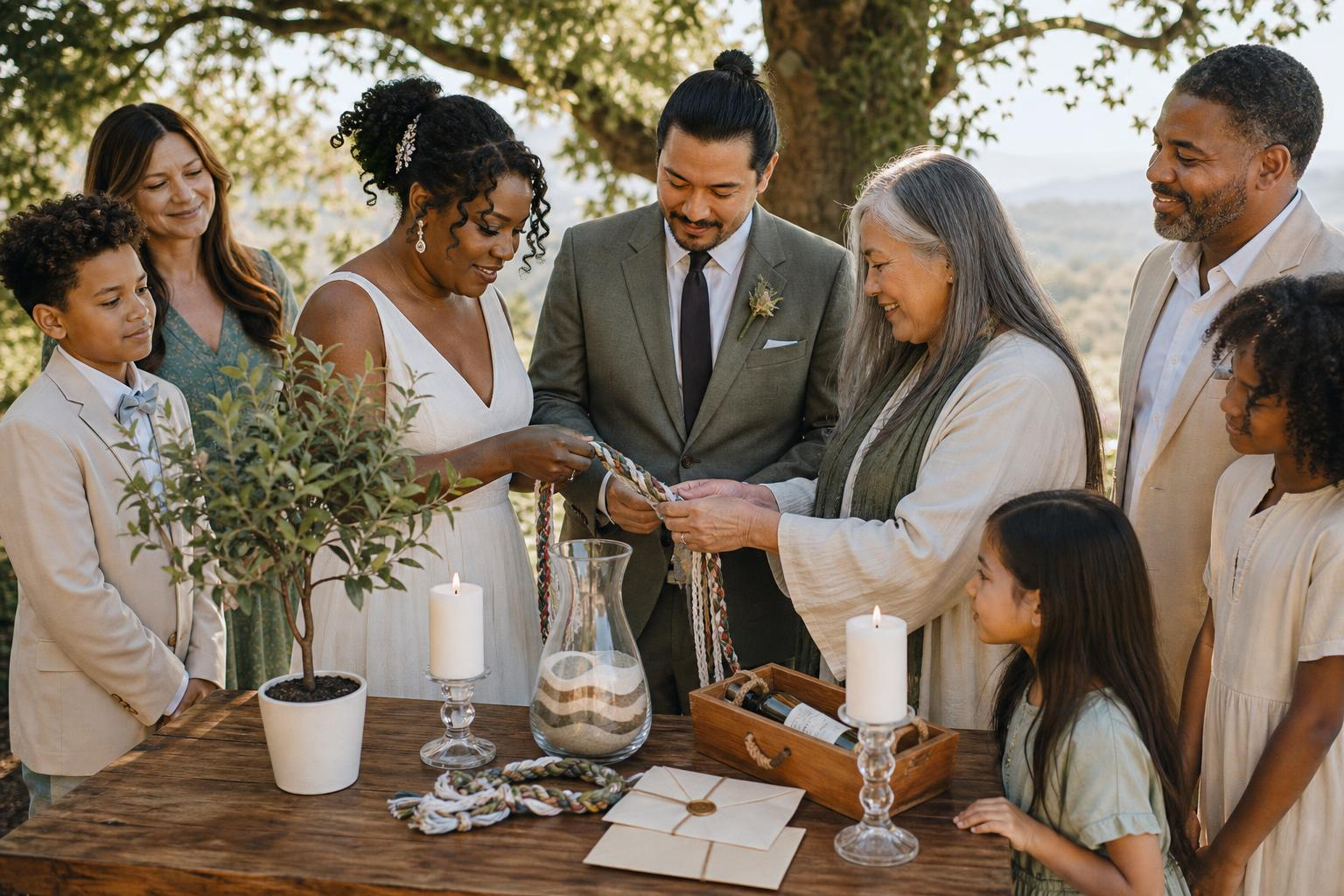
A unity ceremony gives a couple one small, visible moment to express what their marriage means to them. It can be traditional, playful, spiritual, family-centered, or entirely original. The important thing is not choosing the most unusual idea. It is choosing a ritual that feels honest, manageable, and connected to the couple’s story.
What do you want your guests to understand about your marriage through this moment?

Example: We want a relaxed ceremony that honors our blended family, our love of gardening, and the promise to keep building a home together.
Short answer: Family, growth, and shared home.
The following unity ceremony ideas can help you guide a couple from “That looks nice” to “That actually feels like us.” Recent wedding-industry guidance includes familiar choices such as candles, sand, handfasting, and tree planting, along with more personal alternatives. The Knot’s unity ceremony roundup is also a useful source of visual inspiration. For couples who want a reading, the Poetry Foundation’s love-poem collection can provide thoughtful possibilities.
1. Classic unity ceremony ideas with a personal touch
Traditional ideas work well when the couple likes a clear visual symbol. Your job as the officiant is to help them add meaning without making the ritual feel overexplained.
1. Unity candle
Each partner lights a taper from a separate candle, then uses both flames to light one larger candle. Invite the couple to choose candles in colors connected to their home, heritage, or wedding design. For an outdoor ceremony, use hurricane glass, battery-operated candles, or a wind-protected setup.

2. Sand ceremony
Each partner pours a different color of sand into one vessel. The result is simple, easy to see, and easy to preserve. Couples may use colors from their wedding palette, sand from meaningful places, or neutral tones that match their home.
3. Water blending
Use two colors of water in clear vessels and pour them into a shared container. This is a useful alternative when the couple wants the symbolism of blending but does not want loose sand. Test the colors first so the final shade is attractive rather than muddy.
4. Unity cord or rope
The couple joins two cords into one braid or ties them together in a simple knot. Choose a cord that can later be displayed in the home. Keep the language focused on partnership, support, and the work of staying connected rather than suggesting that either person is losing independence.
5. Handfasting
In a handfasting ritual, the couple’s hands are gently bound with ribbons, cords, or fabric. The officiant may name the promises represented by each strand, such as patience, laughter, honesty, or courage. Handfasting has cultural and spiritual associations that vary, so avoid presenting one version as the universal or original meaning. Encourage the couple to learn from a knowledgeable tradition bearer when they are drawing from a living cultural or religious practice.
2. Nature-centered unity ceremony ideas
Nature rituals are a good fit for couples who enjoy gardening, hiking, farming, conservation, or simply want a symbol that continues after the wedding day.
6. Tree planting
The couple adds soil to a tree or plant during the ceremony, then takes it home or plants it at a meaningful location. A potted tree is usually easier than planting directly in the ground. Consider the season, climate, venue rules, and transportation before promising a permanent outdoor planting.
7. Tree watering
If planting feels too involved, the couple can water a prepared plant together. This is especially practical when the venue does not permit digging or when the couple wants a shorter ritual.
8. Family soil ceremony
Parents, children, or chosen family members may contribute small amounts of soil from meaningful places. The couple then combines the soil around a plant. Keep participation optional; not every relative wants to stand at the altar or be called forward.
9. Seed ceremony
Each partner places seeds into one packet, pot, or small garden bed. The officiant can connect the action to patience, care, and the understanding that a marriage grows through repeated attention.
10. Stone or pebble gathering
Invite the couple to place stones into a shared bowl. The stones might come from favorite trips, a family property, or a local craft supplier. Guests can also write brief words on smooth stones for the couple to keep.
3. Keepsake unity ceremony ideas
Some couples prefer an object they can open, read, display, or use later. These ideas create a physical reminder without requiring a large performance.
11. Wine box or anniversary box
The couple places a bottle, two glasses, and a letter into a box to open on a future anniversary. If alcohol is not part of their life, substitute tea, sparkling cider, coffee, or another meaningful item. Agree on the opening date before the ceremony and write it clearly inside the box.
12. Love letters
Each partner writes a private letter and seals it during the ceremony. They may read the letters later that evening, on their first anniversary, or during a difficult season when encouragement is needed. The officiant can explain the ritual in one or two sentences and let the privacy of the letters do the rest.
13. Shared journal
The couple writes one sentence each in a journal during the ceremony, then continues using it for anniversaries, travel notes, gratitude lists, or family milestones. This works well for couples who prefer words over symbolic objects.
14. Quilt square or fabric panel
Each partner adds a square, stitch, ribbon, or written message to a shared textile. Family members may prepare pieces in advance. Have the materials ready and limit the number of steps so the ceremony stays warm rather than instructional.
15. Unity artwork
The couple adds brushstrokes, colors, or signatures to one canvas. Use non-toxic, quick-drying materials and protect clothing, flooring, and formalwear. The finished piece can become home décor or be photographed and recreated later by an artist.
4. Family-blending and community-focused ideas
A unity ceremony can honor more than the couple. When children, parents, or close friends are part of the story, a shared ritual may help everyone feel included without placing pressure on anyone.
16. Family sand blending
Each member of a blended family pours a small amount of sand into a shared vessel. Use separate small containers so children can participate comfortably. The couple should decide in advance whether the vessel represents the whole family, the marriage, or both.
17. Family candle lighting
Children or parents can light individual candles, followed by the couple lighting one central candle. Battery-operated lights may be the better choice for young children, crowded spaces, or venues with flame restrictions.
18. Family recipe or ingredient ritual
The couple combines ingredients for a family recipe, such as spices in a jar, tea leaves, or cookie ingredients. This can be meaningful when food connects both families. Do not ask guests to taste anything unless the venue, allergies, and food-safety arrangements have been considered.
19. Community blessing cards
Guests write short hopes, prayers, poems, or practical encouragement for the couple. The officiant can invite guests to place the cards in a box during the reception or have a trusted person collect them before the ceremony ends.
5. Culturally respectful and spiritually meaningful options
Some couples want their unity moment to reflect faith, ancestry, or cultural identity. That can be beautiful when it is approached with humility rather than treated as decoration.
20. A reading, blessing, or meaningful cultural ritual
The couple may include a poem, scripture passage, prayer, family blessing, or ritual from their own tradition. The best approach is to ask who has the authority to guide the practice and whether the couple has permission to adapt it. A poem from a trusted collection can offer a meaningful alternative when the couple wants emotional depth without borrowing a ceremony that is not theirs.
How to choose and lead the right ritual
Start with the couple’s values. Ask what they want to emphasize: family, faith, home, adventure, healing, commitment, humor, or shared work. The answer usually narrows the choices quickly.
Match the ritual to the venue. Candles, soil, water, glass, food, live plants, and open flames all require practical planning. Confirm what the venue permits and assign one person to place and remove the materials.
Keep the explanation brief. A unity ceremony usually needs a short introduction, the action itself, and one closing sentence. If the symbolism requires a five-minute lecture, the ritual may need simplifying.
Give every participant a clear role. Tell people where to stand, what to hold, and when to move. Children especially benefit from a quick rehearsal and a backup plan.
Decide where the ritual belongs. Many couples place it after vows or ring exchange, but it can also happen before the final pronouncement or during the reception. Choose the point that supports the ceremony’s emotional flow.
Officiant preparation checklist
- Confirm the couple’s meaning and preferred wording.
- Check venue rules for flame, water, soil, food, and glass.
- Assign a setup and cleanup helper.
- Rehearse the physical steps once.
- Prepare a backup for weather or spills.
- Confirm pronunciation of names and cultural terms.
- Keep the ritual short enough to remain memorable.
| If the couple wants… | Consider… | Plan for… |
|---|---|---|
| A classic visual symbol | Unity candle or sand | Wind, spills, and display vessels |
| A living reminder at home | Tree, plant, seed, or watering ritual | Transport, climate, and venue rules |
| A private keepsake | Letters, wine box, journal, or artwork | Storage and a future opening date |
| Family participation | Family sand, candles, stones, or recipe | Simple roles and voluntary participation |
| Cultural or spiritual meaning | Reading, blessing, or tradition-specific ritual | Accurate guidance and respectful permission |
A simple script structure for any unity ceremony
- Introduce the meaning: Explain what the ritual represents for this couple.
- Name the action: Tell guests what the couple is about to do.
- Allow the moment: Give the couple enough time to complete the ritual without rushing.
- Connect it to the marriage: Tie the symbol back to the promises already made.
- Move forward: Transition cleanly to the pronouncement, blessing, kiss, or next part of the ceremony.
For example, a tree ceremony might be introduced as a promise to care for something together, followed by the couple adding soil and water. A letter ceremony might need only a sentence about carrying today’s promises into future seasons. The words should serve the couple, not compete with them.
Final thoughts for officiants
The strongest unity ceremony ideas are not necessarily the newest or most elaborate. They are the ones the couple can explain in plain language and recognize as their own. When in doubt, choose the ritual that is easiest to perform, easiest to preserve, and most connected to a promise the couple actually intends to keep.
Meet with the couple, listen for the value underneath the idea, and build the ceremony around that value. A steady, well-rehearsed two-minute ritual can carry more meaning than an impressive production that does not fit the people standing in front of you.
Frequently Asked Questions
What is the most popular unity ceremony idea?
Unity candles and sand ceremonies remain familiar choices because they are easy for guests to understand and create a keepsake. Couples who want something more personal often choose tree planting, handfasting, letters, or family-blending rituals.
When should a unity ceremony happen during the wedding?
Many couples place it after the vows or ring exchange and before the final pronouncement. It can also happen earlier or during the reception if that creates a better flow for the couple and venue.
What unity ceremony works best for an outdoor wedding?
Tree watering, planting, stones, letters, a cord ritual, or sand can work well outdoors. If using candles, confirm the venue’s rules and prepare wind protection or flameless alternatives.
How can children participate in a unity ceremony?
Children can pour sand, add soil, light battery-operated candles, place stones, contribute a family recipe ingredient, or write a message. Give each child one simple role and make participation optional.
How do couples include cultural or religious traditions respectfully?
They should begin with traditions they genuinely practice or inherit, learn the meaning accurately, and seek guidance from a qualified representative when appropriate. Avoid copying a sacred ritual merely because it looks attractive in a wedding photo.