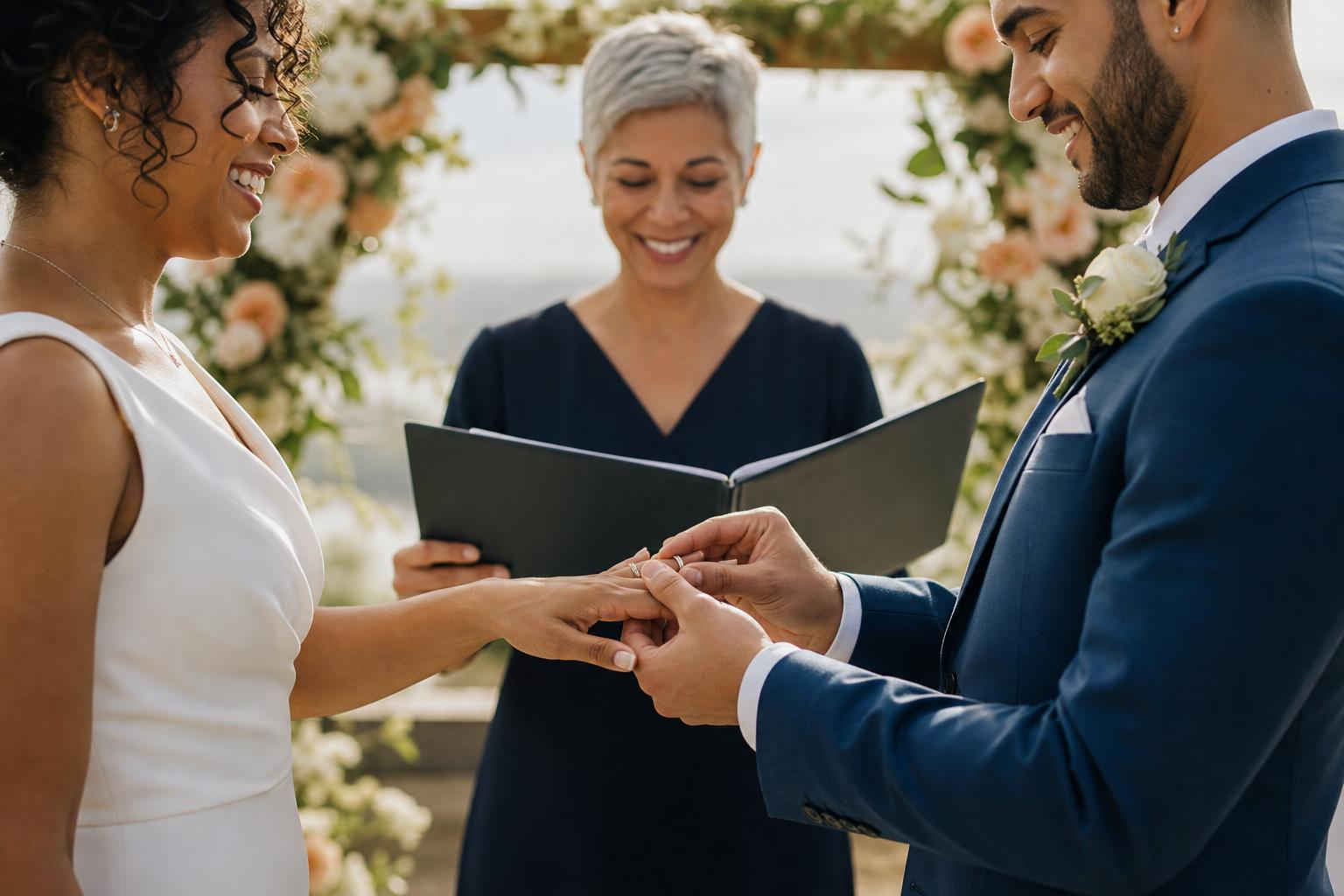
The ring exchange is one of the most recognizable moments in a wedding ceremony, but it does not have to sound copied from a dozen other weddings. The best ring exchange wording gives the couple a clear moment to make a promise, explains why the rings matter, and sounds natural when spoken aloud.
As the officiant, your job is not to write the couple’s entire love story in thirty seconds. It is to help them choose words that fit their relationship and ceremony. The examples below are original starting points for traditional, modern, spiritual, humorous, and blended-family celebrations.

What ring exchange wording needs to accomplish
Ring exchange wording usually does three simple things: identifies the rings, connects them to the couple’s promises, and gives the person placing the ring a phrase to speak. It may happen after the vows or declaration of intent, depending on the ceremony design. Wedding-industry ceremony guides commonly distinguish the vows from the ring exchange: vows express promises, while the ring exchange accompanies the giving of the physical rings. The Knot’s ring exchange guide offers a similar overview.
Before drafting language, decide whether the couple wants a short repeat-after-me format or a longer statement spoken from memory or a printed card. Repeat-after-me wording is often the safest choice for a nervous couple. It keeps the pace steady and helps both partners speak clearly.
A simple structure for the officiant
- Introduce the meaning: “These rings are a visible reminder of the promises you have made today.”
- Invite the exchange: “Please take your partner’s ring.”
- Offer the wording: Give the speaker one sentence at a time.
- Allow the moment to breathe: Pause while the ring is placed before moving on.
Keep the introduction brief unless the couple specifically wants a longer reflection. The ring exchange should support the ceremony, not compete with the vows.
Traditional ring exchange wording
Traditional wording often works well when the ceremony has a formal, religious, or classic tone. It does not need to sound stiff. You can preserve a sense of dignity while using language that feels understandable to the couple and their guests.
Original traditional examples
- “With this ring, I join my life with yours. I promise to love you, honor you, and stand beside you through all our days.”
- “I give you this ring as a sign of my commitment. May it remind us of the promises we make and the life we build together.”
- “As I place this ring on your finger, I give you my love, my faithfulness, and my promise to walk with you in every season.”
- “With this ring, I choose you as my spouse and partner. I will cherish our marriage and keep turning toward you, today and always.”
For a more formal ceremony, the officiant might introduce the exchange this way:

“These rings are symbols of the covenant you enter today. As you give and receive them, may they remind you of the love, trust, and faithfulness that will guide your marriage.”
Modern ring exchange wording
Modern wording is usually direct, conversational, and focused on partnership. This style is a good fit for couples who want to avoid archaic phrases or who want their ceremony to sound like real life rather than a formal script.
Original modern examples
- “I give you this ring as a reminder that I choose you, support you, and want to keep growing with you.”
- “This ring represents the life we are creating together. I promise to meet you with honesty, patience, and love.”
- “I place this ring on your finger with joy. I will be your teammate, your safe place, and your partner for all that comes next.”
- “This ring marks the promise we are making today: to keep showing up, keep listening, and keep choosing one another.”
Modern wording does not have to be casual. The key is clarity. If the couple would not say “I pledge my undying devotion” in everyday conversation, do not force that phrase into the ceremony simply because it sounds ceremonial.
How to make modern wording personal
Ask each partner to name one quality they want to bring into the marriage. Common answers include steadiness, curiosity, humor, patience, courage, generosity, or trust. Turn that answer into a promise:
Example: “I give you this ring as a promise to bring patience to our hard days, curiosity to our growing years, and joy to the ordinary moments we share.”
This approach produces language that feels personal without requiring a long story or a private inside joke.
Spiritual and faith-aware ring exchange wording
Spiritual wording can refer to blessing, sacred commitment, grace, prayer, or a higher purpose without assuming that every couple uses the same religious vocabulary. The couple should decide whether they want the language to be explicitly tied to a faith tradition or broadly spiritual.
Original spiritual examples
- “May this ring remind us that our love is strengthened by grace, guided by wisdom, and renewed through every season of life.”
- “I give you this ring in gratitude for the path that brought us here. May our marriage be a source of peace, kindness, and courage.”
- “As this ring surrounds your finger, may our commitment surround our lives with faithfulness, compassion, and hope.”
- “With this ring, I promise to honor the love entrusted to us and to care for the life we are blessed to share.”
If the couple wants scripture, prayer, poetry, or another sacred reading, choose a passage that is appropriate for the ceremony and permitted for use. The Poetry Foundation’s collection of love poems can be a useful inspiration source when the couple wants poetic ideas, although the officiant should help them select a short passage that fits the ceremony’s tone.
Planning question: Does the couple want the spiritual language to name a specific faith tradition, or should it welcome several beliefs in the room?
Example: “They want a spiritual tone centered on gratitude and compassion, but they do not want a denomination-specific blessing because their families come from different traditions.”
Short answer: Broadly spiritual, inclusive, and welcoming.
Humorous ring exchange wording that still feels loving
Humor can make the ring exchange feel relaxed, especially for a couple who naturally teases one another. The safest humor is affectionate, recognizable, and unlikely to embarrass either partner. A wedding ceremony is not the place to reveal a secret, revisit an old argument, or make one person the punchline.
Original humorous examples
- “I give you this ring as a promise to love you, listen to you, and admit when you were right—at least eventually.”
- “With this ring, I promise to share the snacks, respect your need for alone time, and never start a new show without you.”
- “I give you this ring and my promise to face life’s big decisions with you, including where we should eat tonight.”
- “With this ring, I choose you for every adventure, every grocery trip, and every discussion about how to load the dishwasher.”
The humor should lead back to a sincere promise. For example, a light line about snacks can end with, “But more than anything, I promise that you will never have to face life alone.” That balance helps the moment land with both laughter and meaning.
Ring exchange wording for blended families
When children or stepchildren are part of the family, the ring exchange can acknowledge that marriage is joining more than two lives. The couple does not have to make children repeat a formal vow, but a short family-centered statement can help them feel included.
Original blended-family examples
- “I give you this ring as a promise to love you and to honor the family we are creating together.”
- “With this ring, I choose you and the life we share. I promise to make room for love, patience, laughter, and every member of our family.”
- “This ring represents my commitment not only to you, but to the home and family we will continue building side by side.”
- “I promise to respect the story that brought us here and to help create a future where each person in our family is valued and loved.”
If the children are participating, the officiant might say:
“Today, this couple is making promises to one another and recognizing the family they are building together. Their rings symbolize a commitment to care for this family with patience, respect, and love.”
Keep the wording honest. Avoid promising a specific parental role unless the adults have discussed what that role means and are comfortable stating it publicly.
Choosing the right format and ceremony pace
There is no single best format. Use the guide below to help the couple choose language that fits both their personalities and the practical conditions of the ceremony.
| Couple’s preference | Recommended format | Officiant’s approach |
|---|---|---|
| Nervous about public speaking | Short repeat-after-me wording | Use one brief phrase at a time and pause for the ring placement. |
| Wants a formal ceremony | Traditional or spiritual wording | Provide a concise introduction about commitment and symbolism. |
| Values everyday language | Modern wording | Use direct promises that sound natural when spoken aloud. |
| Loves playful banter | Humorous wording with a sincere close | Confirm that both partners approve every joke before the rehearsal. |
| Blending families | Family-centered wording | Acknowledge the shared home and family without overpromising roles. |
- Confirm who holds each ring before the ceremony.
- Mark the exact wording in the officiant’s script.
- Practice placing the ring slowly over the knuckle.
- Decide whether the couple repeats after the officiant or speaks independently.
- Check pronunciation of names and meaningful words.
- Print a large enough script for easy reading.
How officiants can polish the final wording
Once the couple selects a draft, read it aloud at a comfortable speaking pace. Listen for repeated ideas, long clauses, and words that feel unlike the couple. A ring exchange usually benefits from one central promise rather than five different promises competing for attention.
Trim unnecessary symbolism. Rings may represent continuity, devotion, partnership, or shared history. Choose one or two ideas and let them breathe.
Use names sparingly. Saying each partner’s name can make the exchange feel personal, but repeating names in every sentence can sound mechanical.
Build in a pause. After the speaker finishes, allow time for the ring to move onto the finger. Do not rush into the next line while the couple is still managing the physical exchange.
Prepare for small mishaps. Rings can be tight, hands can shake, and a ring may briefly slip. Stay calm, give the couple time, and avoid turning a minor pause into a joke unless the couple has invited that style.
Final guidance for a meaningful ring exchange
The strongest ring exchange wording is not necessarily the most elaborate. It is the wording the couple can say with confidence and mean from the heart. Offer them a few distinct styles, ask what feels true, and then shape the final version around their voice.
Before the wedding day, confirm the wording, order, names, and ring logistics in writing. On the day itself, speak slowly, keep your attention on the couple, and let the moment be as sincere—or as playful—as they have chosen.
Frequently Asked Questions
What is ring exchange wording?
Ring exchange wording is the short statement spoken while one partner gives a wedding ring to the other. It usually connects the physical ring with promises of love, commitment, partnership, or family.
Should ring exchange wording be the same as wedding vows?
Not necessarily. Vows are usually broader promises about the marriage, while ring exchange wording accompanies the giving of the rings. Couples may keep them separate or combine them into one moment.
How long should ring exchange wording be?
For many ceremonies, one or two sentences per person is enough. Nervous speakers often do best with a short repeat-after-me format, while confident couples may prefer a slightly longer personal statement.
Can ring exchange wording be funny?
Yes. Affectionate humor can work well when both partners approve the joke and the wording ends with a sincere promise. Avoid humor that embarrasses, criticizes, or reveals private information.
How can blended families be included in the ring exchange?
The couple can use wording that recognizes the family they are building together. Children may also participate in a separate family promise, ring-warming activity, or unity ritual if that fits the ceremony.
Can an officiant write custom ring exchange wording?
Yes. An officiant can offer original drafts based on the couple's preferred tone, faith background, family structure, and speaking style. The couple should approve the final wording before the ceremony.